The Tourist

Tourists are often viewed as the major motivators for negative change within the tourism industry. When the holistic perspective is applied to view the tourism industry, one begins to see where much of the lack of information in the current understanding of tourism can be found. This can be a liberating thought for tourists as it recognizes they are in a position to be vehicles for major positive change simultaneously.


The Power of the Tourist

Tourist Facts

  • “The World Tourism Organization estimated the number of international tourists traveling the world in 1999 was 664 million” (Stronza 2001, 264).
  • The international Ecotourism Society calculated that tourism receipts represent one third of the world trade services” (Stronza 2001, 264).

Erve Chambers’ Traveler’s Tips

  1. Understand that when you travel you are a consumer of precious goods and places.
  2. Recognize that, in many of the places you travel, your relationship to the local population is primarily economic and is broadly influenced by dramatic differences in wealth.
  3. Learn to recognize local customs regarding dress and behavior, but don’t overdo it.
  4. There are subtleties concerning the uses and conventions of “foreign” language exchanges that you can’t find in a phrase book.
  5. Learn to appreciate the elusive nature of authenticity.
  6. Make an effort to understand how tourism operates in the places you visit.
  7. Consider tourism experiences that are community based.
  8. Still, be wary of overly simplified distinctions between “mass” tourism and the “new” tourism.
  9. Be aware of the “child” that travels with you.
  10. Strive to be a good host.

(Chambers 2005)


Food for Thought

The tourist gaze shapes, “the outcome of touristic encounters by giving preference to locals who look and behave in ways that are authentically indigenous or ethnic. A problem is that authenticity is a subjective concept, and tourists often define for themselves what is authentic, relying of popular stereotypes as points of reference rather than on historical or ethnographic facts. . . . What tourists choose to see is, in turn, strongly influenced by the marketing efforts of tour operators, the popular media, and the state” (Stronza 2001, 271).


Bibliography

Chambers, Erve. 2005. “Can the Anthropology of Tourism Make Us Better Travelers?” In NAPA Bulletin. 23. 27-44.

September 6, 2017. https://pixabay.com/photos/passport-luggage-trolley-travel-2733068/.

Stronza, Amanda. 2001. “Anthropology of Tourism: Forging New Ground for Ecotourism and Other Alternatives.” In Annual Review of Anthropology. 261-283.

Sustainability


Like overtourism, sustainability within the tourism context is also shrouded in controversy. This is also largely due to the lack of an inclusive definition of the term. Commonly, the term “sustainability” is described as, “development that meets the needs of the present without compromising the ability of future generations to meet their own needs” (Butler 2018, 2).

When sustainable tourism isn’t implemented with a holistic approach in mind a rise in anti-tourism movements or the reluctance to limit tourist numbers begins to emerge. This is due largely to through the fear of, “the potential loss of income and employment, the fear of creating a negative image of a destination towards tourism, and political cost of lower tourist numbers” (Butler 2018, 7).


Common Terms Used to Describe Sustainability Within a Tourism Context

Critiques of Ecotourism

  • “There needs to be much more attention paid to the evaluation of global impacts on resources and holistic effects of all types of tourism in different settings, rather than simple labeling of forms of tourism as sustainable or not” (Butler 2018, 3).
  • “It is important to focus on how tourism can contribute to overall sustainability rather than whether it is sustainable itself” (Butler 2018, 4).

Defining Last Chance Tourism

  • Ties sustainability and overtourism together.
  • As a certain species, environment, historic building etc. becomes increasingly rare to find or degrades, there is a growth in appeal to view the spectacle before it disappears for good.

Bibliography

Butler, Richard. 2018. “Sustainable Tourism in Sensitive Environments: A Wolf in Sheep’s Clothing?” In Sustainability. 1-11.

March 16, 2015. https://pixabay.com/photos/street-grass-sidewalk-light-urban-675224/.

Overtourism


You’ve probably heard of the term “overtourism” when discussing prominent issues within the tourism industry. Ironically, “the term is still not clearly delineated and remains open to multiples interpretations” (Koens et al. 2018, 1). Despite this, academics have continued to center their focus on ways to combat the phenomenon.


Examples of Overtourism

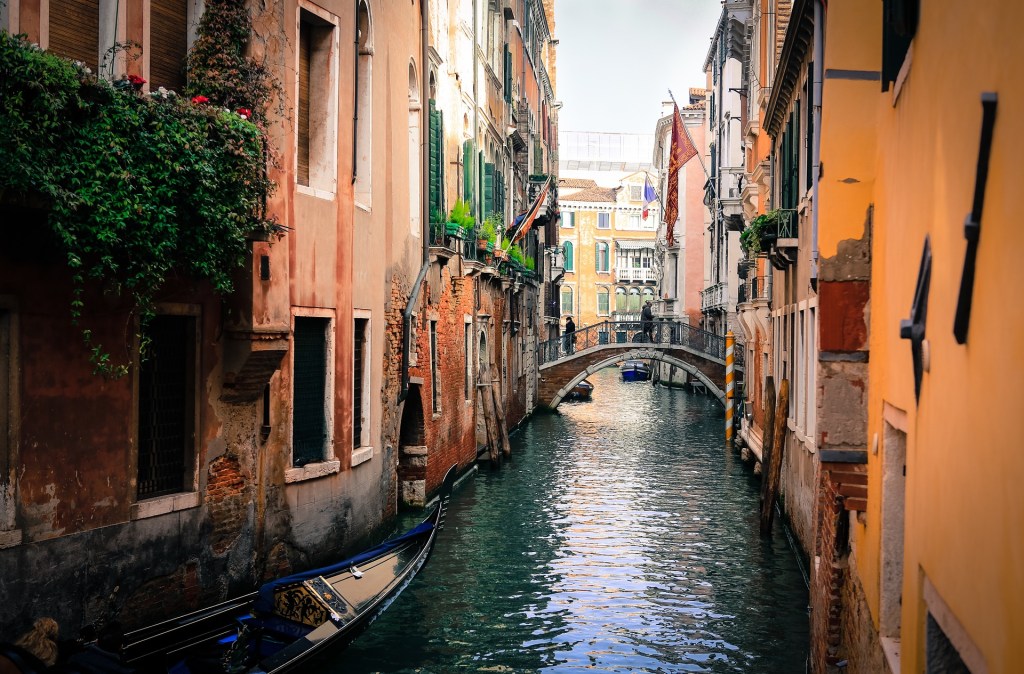
Venice, Italy

  • “In 2017, the city received an average of 60,000 visits per day” (Seraphin et al. 2018, 375).
  • The city is famous for its’ history, architecture, geography, art and romanticism.
  • Ambidextrous Management approach calls for public and private sectors to, “work together toward a common goal in order to trigger and maintain a long-terms profitable tourism industry” (Seraphin et al. 2018, 376).

Barcelona, Spain

  • “Barcelona’s Tourism Activity Report, 2016 shows that the percentage of inhabitants that consider the city to have reached its limit of capacity went from 25% in 2012 to a 48.9% in 2016” (Martin et al. 2018, 2).
  • Barcelona has been vital to the academic study of the experience’s of hosts in tourism.
  • “The way in which local people perceive tourism impacts is highly accurate predictor of their support for tourims and tehi engagement in promoting sustainable tourism. Thus, citizen’s support for tourism depends on the positive and negative impacts perceived by the local people” (Martin et al. 2018, 3).

Bibliography

December 28, 2017. https://pixabay.com/photos/venice-italy-gondolas-channel-1276664/

Koens, Ko et al. 2018. “Is Overtourism Overused? Understanding the Impact of Tourism in a City Context.” In Sustainability. 1-15.

Martin, Jose et al. 2018. “An Analysis of the Factors behind the Citizen’s Attitude of Rejection towards Tourism in a Context of Overtourism and Economic Dependence on This Activity.” In Sustainability. 1-18.

Seraphin, Hugues et al. 2018. “Over-tourism and the fall of Venice as a destination.” In Journal of Destination Marketing & Management. 374-376.

Introduction

Tourism has grown to be one of the largest industries in the world. One of the largest debates among academics is that of the current lack of a holistic approach in the current literature and understanding of the industry. Tourism research is lacking in combined information on the internal and external factors that influence the whole of tourism.

Overtourism and sustainability are two common issues in the tourism industry which have begun to peak the interests of academics in recent years. This website provides some brief information on these topics as well as what the tourist can do to help combat issues of tourism.


Bibliography

Sankowski, Darius. January 9, 2019. https://pixabay.com/photos/old-journey-adventure-photo-map-1130731/ .

Design a site like this with WordPress.com
Get started